Rusutsu Water Cycle Project: Phase 2 Begins
hiro
Rusutsu NatureLink
To continuously understand groundwater conditions, it is not enough simply to install wells and sensors. A reliable environment is also needed to transmit and store the data collected.
The Rusutsu Water Cycle Project uses LoRaWAN, a low-power, long-range wireless communication technology, to build a system for remotely collecting data such as water levels and rainfall.
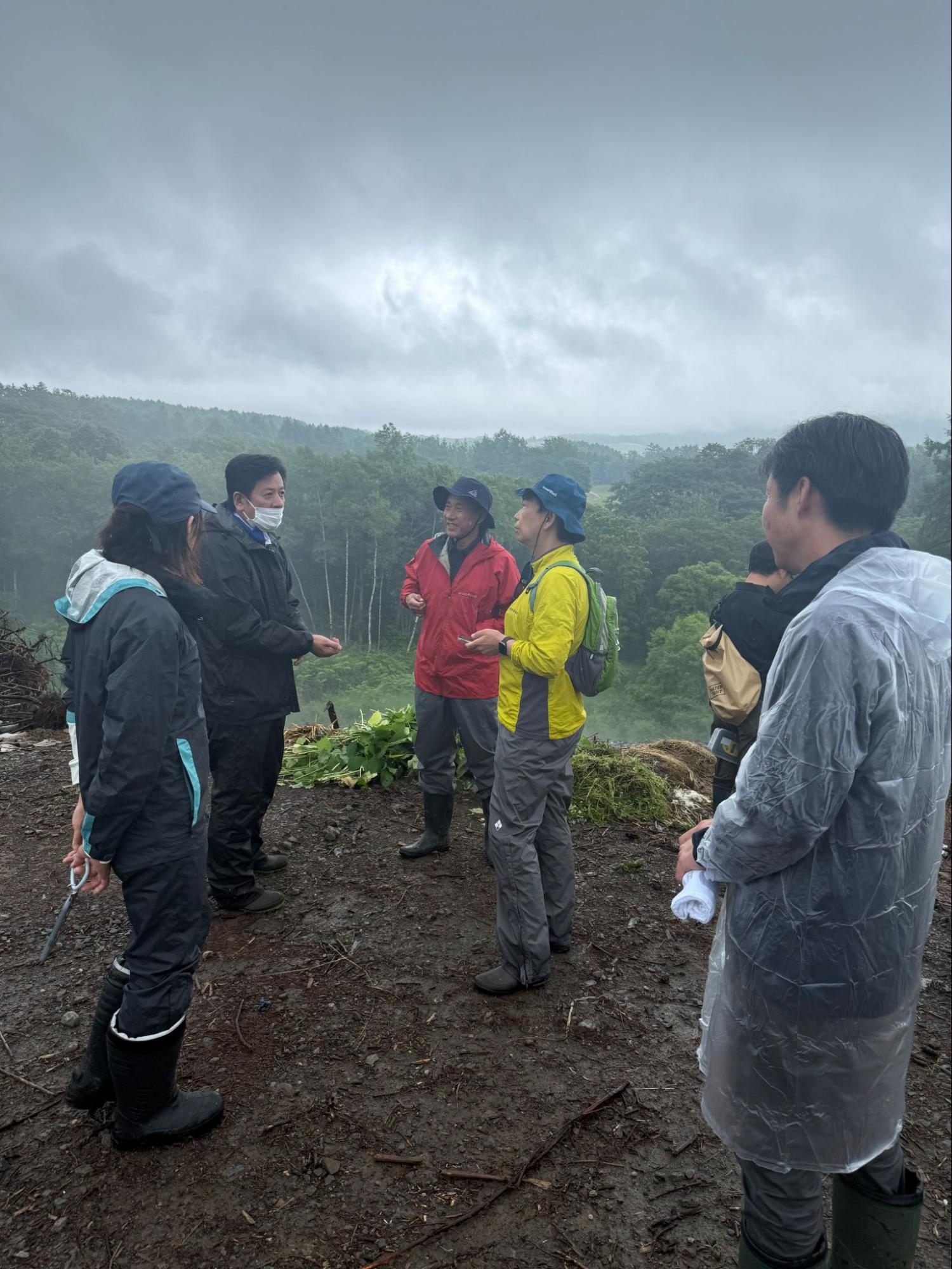
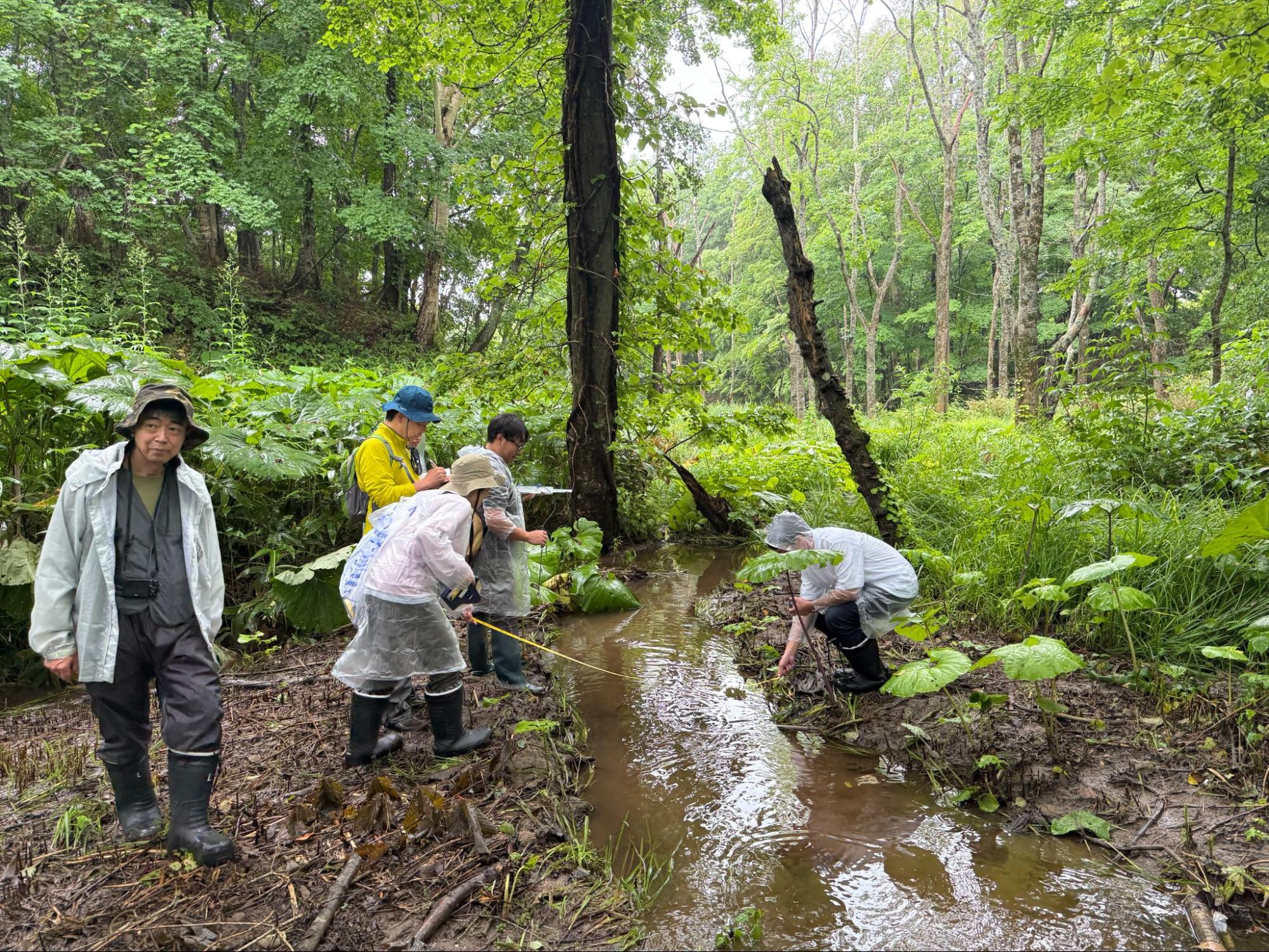
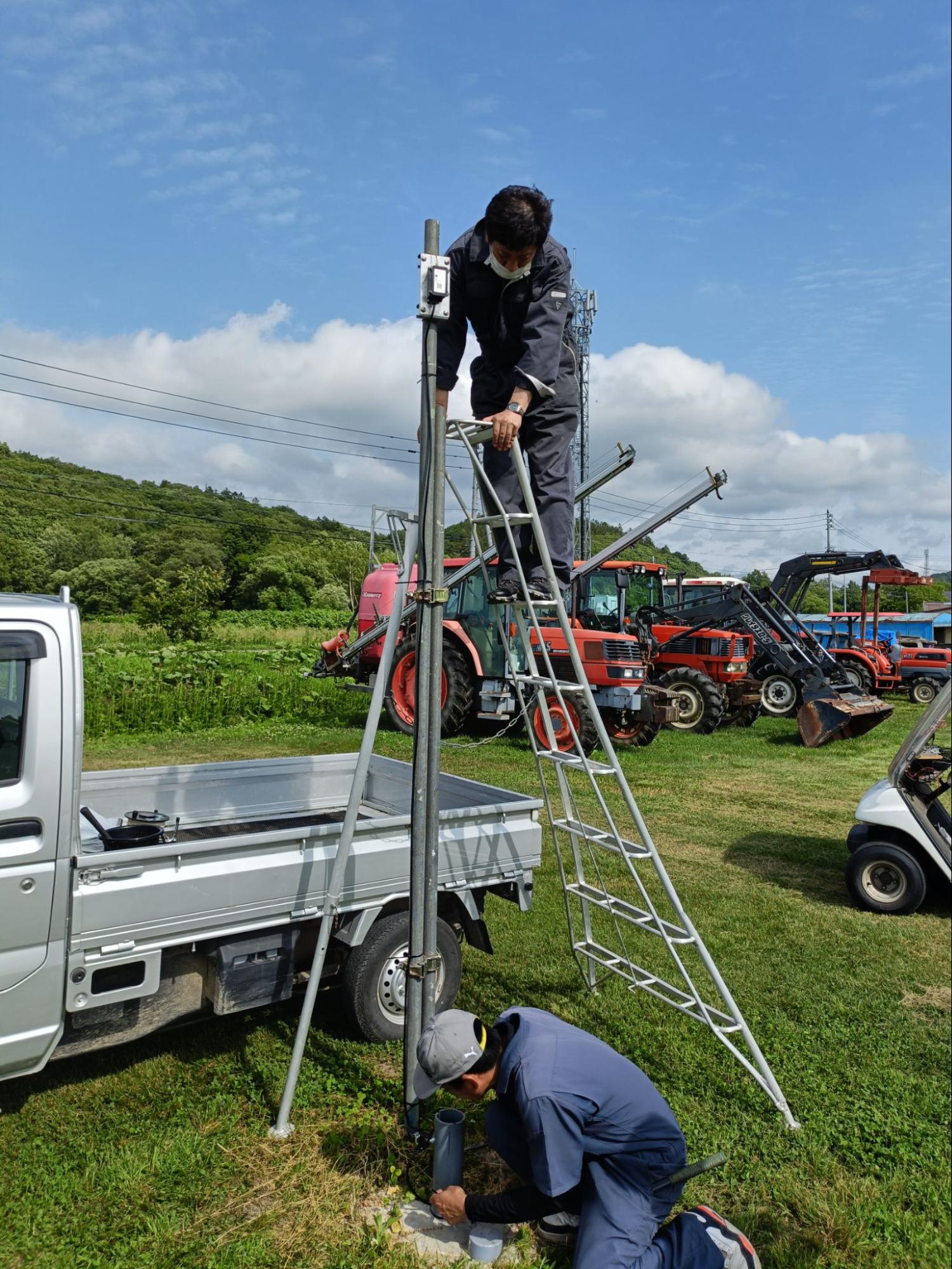
During Phase 2, we checked the operational status of sensors installed at each observation site, as well as their communication links to the LoRaWAN gateway.
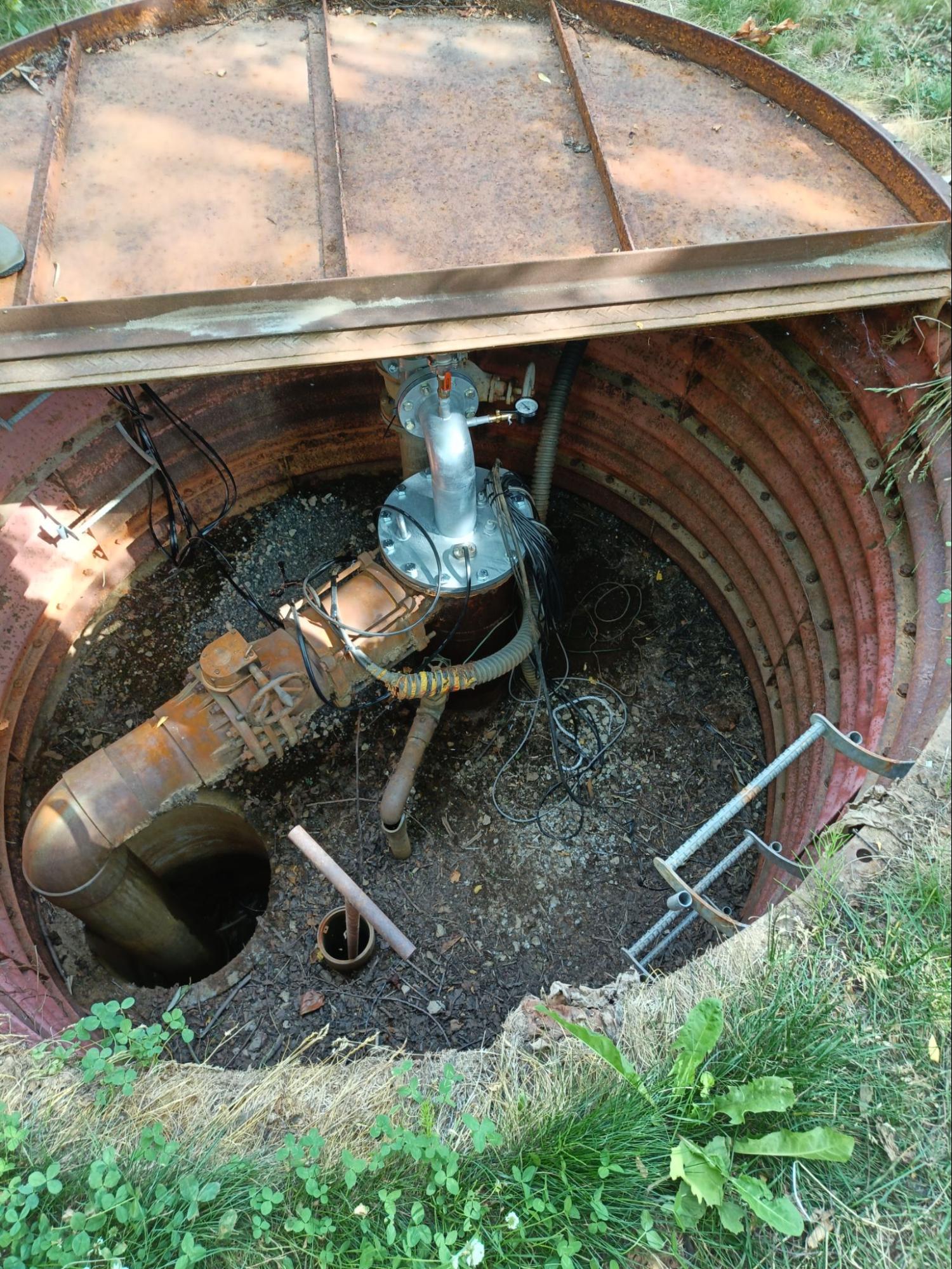
At Izumikawa Well No. 1, the installed water-level sensor was not returning accurate readings, so we replaced it with a different sensor.
When we tested the removed sensor in a pool, it returned readings that generally corresponded to the water depth up to 61 cm. Beyond that depth, however, it consistently returned a fixed value of 108 cm, regardless of the actual water depth.
These results indicate that the device is unsuitable for monitoring groundwater levels in deep wells. However, it may be reusable in applications with a limited measurement range, such as shallow rivers.
We also confirmed that, in the Izumikawa area, the water-level sensors were functioning but could not communicate with the existing gateway.
In mountainous areas, terrain, forests, and buildings can obstruct communications. As the number of observation sites increases, it becomes difficult for a single existing gateway to cover every sensor.
To understand groundwater conditions across the entire region, additional LoRaWAN gateways will be needed in areas with a high density of sensors.
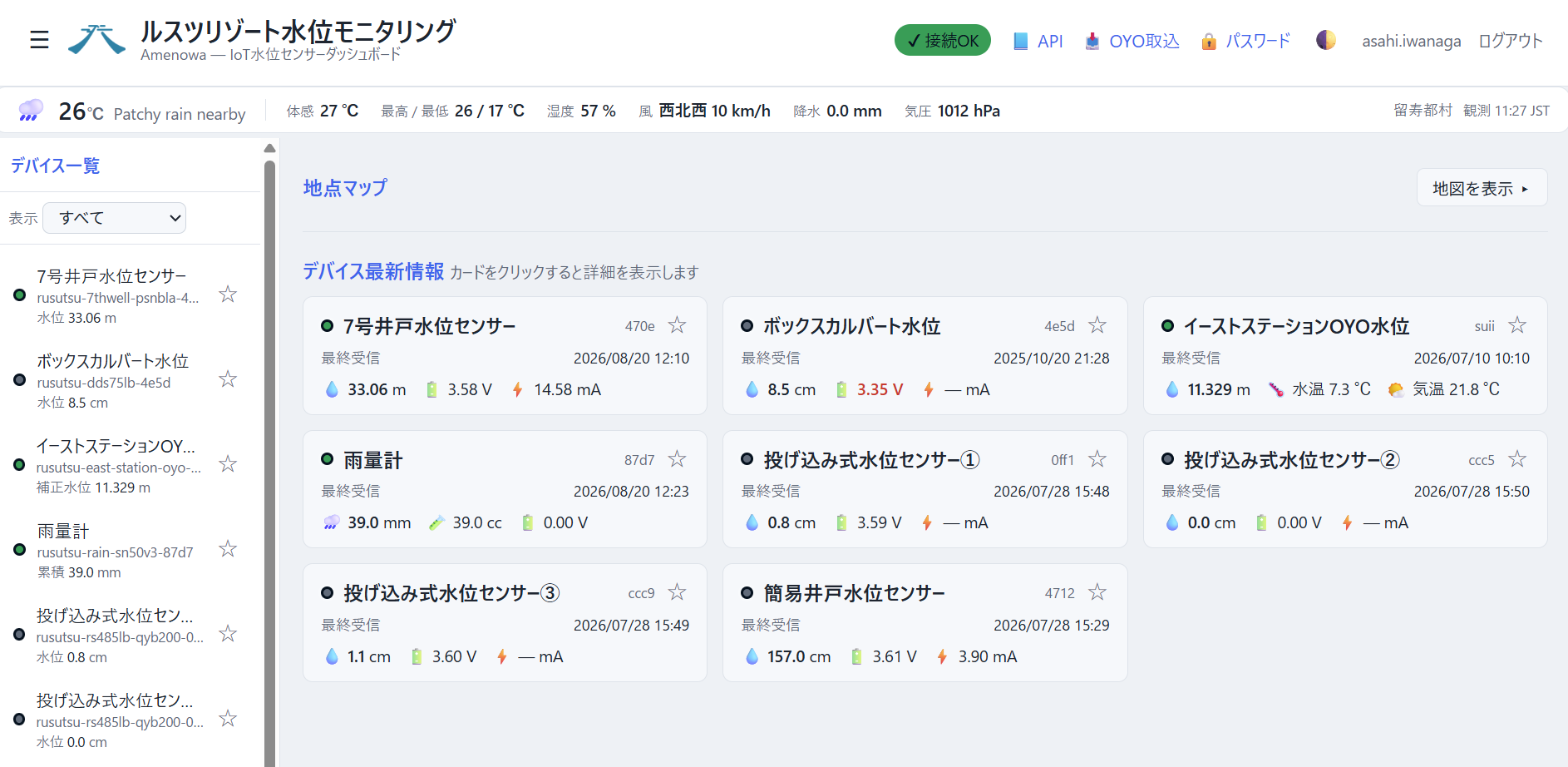
A system is also needed to allow on-site staff to directly check sensor operating status, the time of the last transmission, measurement values, and communication errors from a smartphone or computer.
This field inspection was more than simply an equipment-installation task. It was an important effort to identify the technical challenges involved in maintaining stable, long-term monitoring in Rusutsu’s demanding natural environment.
The main tasks planned for Phase 2 included checking observation wells, rain gauges, the LoRaWAN communication environment, data collection, and web integration.